Humans have been making art about love for as long as we have had art. Art is love's mirror: it reflects the experience and lets us see angles we could not see on our own.
It is also, less helpfully, love's script. The stories we consume do not just describe love. They actively shape what we expect love to look like. That is worth knowing about.
Each medium does something different:
Literature goes inside the experience: the slow unfolding of one mind learning another, the misreadings, the doubt.
Music lets you process and not feel alone. The right song at the right moment works neurologically a bit like having a friend who has been through it.
Film shows us models, and this is where it gets distorting. A two-hour movie has to skip the Tuesdays in February and compress real relationships into peaks and crises. Watch enough of them and you start to believe that peaks and crises are all there is.
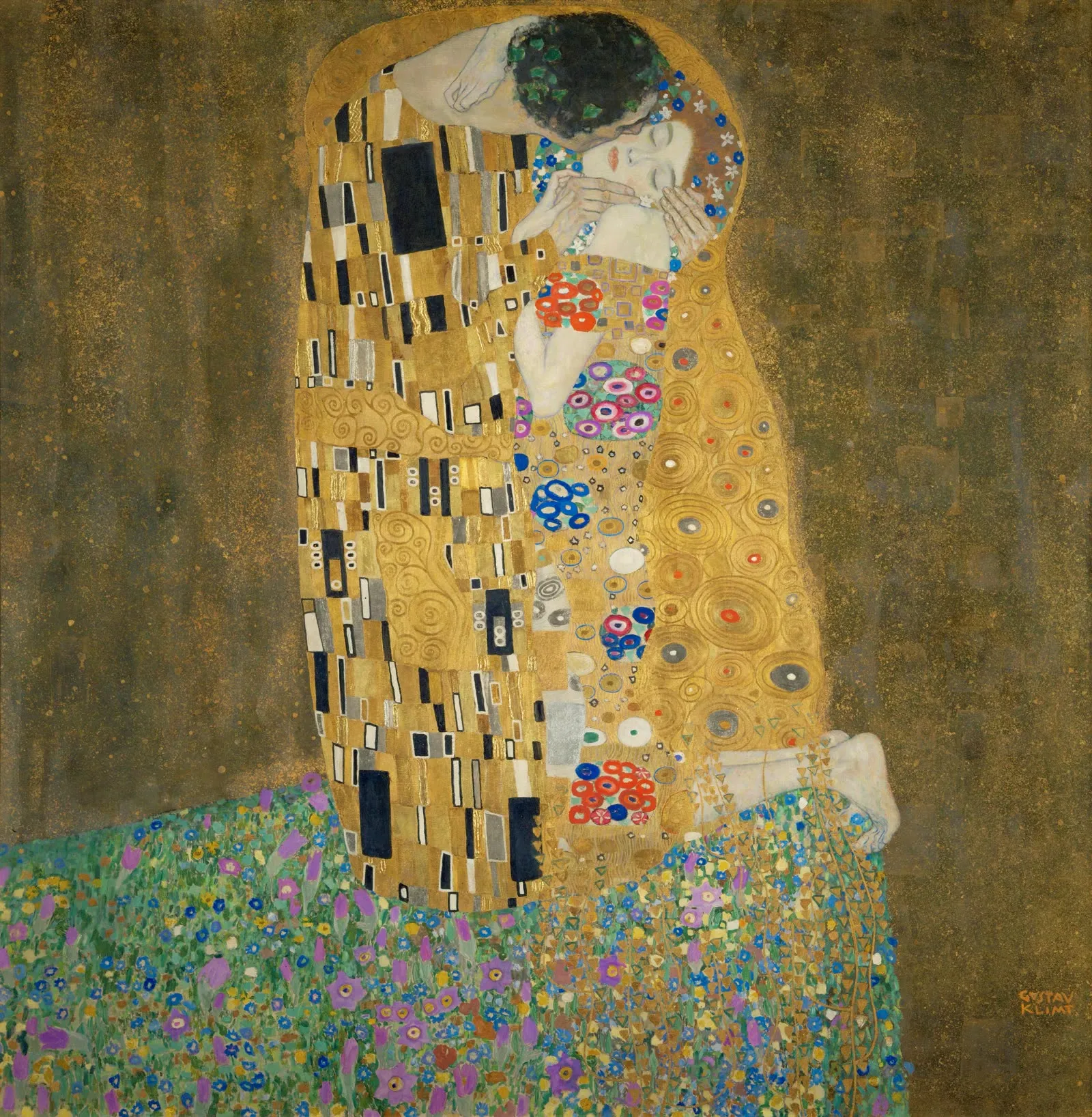
Visual art freezes a moment long enough to sit with it. Klimt's The Kiss, a Romantics' moonlit couple, a Renaissance pietà: presence, not narrative.
Dance catches what love feels like in the body: tango's tension, a waltz's coupled formality, modern work that risks awkwardness for honesty.
The practical takeaway: notice the gap between art and life. When your relationship does not feel like a movie, it is often not because something is wrong. It is because movies are 90 minutes of compressed peaks and real love is 90 minutes of being slightly hungry while doing taxes together.
Borrow vocabulary from the art you love, not blueprints. The right song names a feeling. The same song's assumption that everyone in love must feel exactly that way is a problem. Take the language. Leave the prescription.
Humans have been making art about love for as long as we’ve had art. Shakespeare’s sonnets, Jane Austen’s novels, Bollywood, country songs about leaving, Renaissance paintings of saints in spiritual ecstasy, every other pop hit — all of it is trying to do something with the feeling we keep finding ourselves inside of.
Art is love’s mirror. It reflects our experience and lets us see angles we couldn’t have seen on our own.
It’s also, less helpfully, love’s script. The stories we consume don’t just describe love — they actively shape what we expect love to look like. That’s worth knowing about.
What each medium does well
Different art forms catch different facets of the same experience:
Literature
Novels are good at the interior of love. The shift from pride to understanding in Pride and Prejudice. The misreadings, the doubt, the slow unfolding of one mind learning another. Contemporary novels do the same work on modern texture — long-distance, online dating, queer love stories that mainstream culture only recently let onto bookstore shelves at scale.
Music
Songs let us process and not feel alone. Country and blues lean into heartbreak; pop into the rush; opera into the cataclysm; lullabies into the slow steady kind. Music gives you a feeling-shaped container to pour yourself into when you can’t find your own words. The right song at the right moment functions, neurologically, a little like having a friend who’s been through it.
Film
Movies show us models. They’re the most directly aspirational form of love-art, and the most directly distorting. A two-hour film has to skip the boring parts — the Tuesdays in February — and compress real relationships into peaks and crises. Watch enough of them and you’ll start to believe the peaks and crises are all there is, which is one of the better ways to be disappointed by real life.
Visual art
Painting and sculpture freeze a moment. Renaissance pietà, Klimt’s The Kiss, the Romantics’ moonlit lovers. These hold a feeling still long enough that you can sit with it. It’s a different mode than narrative — less story, more presence.
Dance
Dance is the medium that catches what love feels like in the body. Tango’s tension and pursuit. Waltz’s coupled formality. Modern interpretive work that risks awkwardness for honesty. The reason dance survives every cultural revolution is that some things about love can’t be said — only moved.
The trouble: love art shapes love itself
This is where it gets interesting and a little uncomfortable. The same art forms that help us understand love also prescribe it. Four research traditions take this seriously:
- Literary theory (de Rougemont, Love in the Western World, 1940) — the Western romantic ideology (love as passionate, doomed, transcendent) was substantially invented by medieval troubadours and Arthurian romance. It wasn’t there before. We inherited a script.
- Media studies (Galician, 2004) — Hollywood love myths actively shape relationship expectations. The “one perfect person” framing, the meet-cute, the grand gesture as proof of love — these are not neutral entertainment. They’re training data.
- Feminist criticism (bell hooks, All About Love, 2000) — gendered power dynamics in romantic representation systematically distort what readers, especially women, learn to expect from love.
- Postcolonial analysis (Appadurai, Modernity at Large, 1996) — Western romantic ideals have spread globally through media and overwritten or hybridized with local scripts. The Bollywood plot is not the Hollywood plot, but neither is the same as what was there 200 years ago.
The practical upshot: a lot of what you think love is came from stories. That’s not bad — humans run on stories. It just means the story you’re working from is one possible story, not the only one or the truest one.
How to consume love-art well
If you take this seriously, three things shift:
Notice the gap between art and life. When your relationship doesn’t feel like a movie, it’s often not because something’s wrong — it’s because movies are 90 minutes of compressed peaks and real love is 90 minutes of being slightly hungry while doing taxes together. Both can be true; only one of them gets songs written about it.
Borrow vocabulary, not blueprints. The right love song names a feeling you didn’t have words for. That’s gift. The same song’s implicit assumption that everyone in love must feel exactly that way is a problem. Take the language; leave the prescription.
Diversify your love-art diet. If every story you’ve consumed about love has been Hollywood romantic comedies, you have a specific cultural script in your head. Read bell hooks on love as a practice. Watch films about long marriages instead of new romances. Read fiction about love in other cultures. Your sense of what’s possible expands.
Love in the digital age
The newest chapter is being written right now. Instagram stories, dating-app profiles, the long-distance FaceTime call — these are new forms of love-art and love-communication, and we don’t yet have good criticism of them.
What we do know: curated representations of romantic happiness on social media correlate with relationship dissatisfaction in the people consuming them. The closer the simulation gets to your real life, the harder it is to remember that everyone is editing. (For the deepest cut on this, see Baudrillard on love as simulation.)
Why this matters
Art about love is a gift and a problem at the same time. The gift is that it lets you feel less alone, find words for the wordless, and imagine relationships you haven’t yet had. The problem is that it can quietly install expectations you didn’t choose and won’t recognize as installed.
The fix isn’t to stop consuming love-art. The fix is to know what it’s doing while you consume it. That’s a love story — what’s it asking me to want?
If you can answer that, you can let the song do what songs do without letting it run your life.
Humans have been making art about love for as long as we have had art. The question is not why: love is one of the most powerful experiences people have, and art is what humans do with powerful experiences. The more interesting question is what art does to love when it processes it.
Because art does not only reflect love. It shapes it. The stories we consume install expectations. The music we play at emotional turning points becomes part of how we remember and interpret those moments. The cultural scripts embedded in the films and novels we grew up with become, in part, the template against which we measure whether what we have is real. This is worth understanding, because it is happening whether you notice it or not.
What each medium does
Different art forms catch different facets of the same experience, and understanding what each does well and what each distorts is part of consuming them wisely.
Literature is best at the interior of love: the shift from one state of feeling to another, the misreadings, the doubt, the slow accumulation of one person learning another. Jane Austen's novels track this at granular resolution. Pride and Prejudice is, at its core, the story of two people revising their understanding of each other and themselves until they can finally see clearly. Contemporary literary fiction does the same work on modern textures: long-distance relationships, queer love stories, the particular loneliness of dating in cities.
Music gives you a container. When you cannot find words for what you are feeling, the right song does the finding for you. Country and blues process heartbreak; pop catches the rush; lullabies carry the slow steady kind; opera goes for cataclysm. Neurologically, listening to music about an emotional experience activates some of the same circuits as having the experience. The right song at the right moment functions a little like having a friend who has been through exactly this.
Film shows us models. This is the medium most prone to distorting love, because a film has to be watchable in two hours. That structural constraint means real relationships get compressed into peaks and crises, and the Tuesdays in February, which is where most of real love actually happens, get cut entirely. Watch enough romantic films and the editing starts to feel like reality: peaks and crises are what love is, and if you are not experiencing them, something might be wrong with your relationship.
Visual art freezes a feeling long enough to sit with it. Klimt's The Kiss holds a moment of tenderness still. The Romantics painted moonlit couples to evoke longing rather than describe it. Renaissance pietAs caught spiritual love at its most annihilating. These are not primarily stories; they are presences. They do their work differently from narrative forms, which is why they endure.
Dance catches what love feels like in the body: tango's tension and pursuit, the waltz's coupled formality, contemporary work that risks awkwardness for honesty. Some things about love cannot be said or painted or filmed. They can only be moved. Dance is the oldest form of love-art and probably the most honest, because the body cannot easily lie about what it is doing.
How art shapes love, not just reflects it
This is where it gets more complicated, and more important.
Denis de Rougemont, in Love in the Western World (1940), traced the Western romantic ideology, love as passionate, transcendent, and implicitly doomed, to medieval troubadour poetry. Before the troubadours, European love literature looked different. After them, love became associated with longing, with obstacles, with intensity that bordered on suffering. We inherited that script without being asked whether we wanted it.
Mary-Lou Galician (2004) documented how Hollywood romantic conventions shape actual relationship expectations: the "one perfect person" framing, the grand gesture as proof of love, the meet-cute as evidence of fate. These are not neutral entertainment. They are training data for what people expect relationships to look and feel like.
bell hooks, in All About Love (2000), analyzed how gendered power dynamics in romantic representation, particularly the expectation that women would center their lives around romantic partnership, systematically distort what readers internalize as love. The representation does not just describe an inequality; it naturalizes it.
Arjun Appadurai's work on media globalization adds another layer: Western romantic ideals have spread globally through film, music, and television, overwriting or hybridizing with local love-scripts that were often quite different. The Bollywood romantic plot has its own conventions; neither it nor the Hollywood version is what was there in either culture 200 years ago.
The practical upshot: a significant portion of what you think love looks like came from stories. That is not a moral failing. Humans run on stories. It just means the script you are working from is one possible script, not the only one, and certainly not the truest one.
Social media as the newest chapter
Instagram, dating-app profiles, the curated representation of romantic happiness: these are new forms of love-art and love-communication, and we do not yet have good critical frameworks for them. What research has established: consuming curated representations of romantic happiness on social media correlates with relationship dissatisfaction in the people doing the consuming. The closer the simulation gets to your actual life, the harder it becomes to remember that everyone is editing.
This is the dynamic Baudrillard was gesturing at before social media existed: when representations become dense enough, they stop being representations of experience and start being the standard against which experience is measured and found wanting.
How to consume love-art well
Three things shift if you take this seriously:
Notice the gap between art and life. When your relationship does not feel like a film, it is often not because something is wrong. It is because films are 90 minutes of compressed peaks and real love is 90 minutes of being slightly hungry while doing taxes together. Both can be true. Only one gets songs written about it.
Borrow vocabulary, not blueprints. The right love song names a feeling you could not name yourself. That is a gift. The same song's implicit assumption that everyone in love must feel exactly that way is a trap. Take the language. Leave the prescription.
Diversify the stories you consume. If every piece of love-art you have encountered has been in one genre or one cultural tradition, you have a specific and narrow script in your head. Reading bell hooks on love as practice, watching films about long marriages rather than new romances, encountering love-art from other cultures: each one expands your sense of what is possible and loosens the grip of the default script.
Art about love is a gift and a problem simultaneously. The gift is real: it lets you feel less alone, find words for the wordless, and imagine relationships you have not yet had. The problem is also real: it quietly installs expectations you did not choose and may not recognize as installed.
The fix is not to stop consuming love-art. The fix is to notice what it is doing while you consume it.